
Dental Office Network Design and Integration in Sioux Falls and the Upper Midwest
Every system in a dental office depends on the network: practice management, digital X-rays, CBCT scans, intraoral cameras, phones, payment terminals and patient Wi-Fi. When the network is designed as an afterthought, it shows up as slow charts, failed image transfers and disconnects in the middle of an appointment.
Kota Technology designs, builds and integrates dental office networks for practices in Sioux Falls and across South Dakota, North Dakota and the Upper Midwest, from a single operatory remodel to a new office build or a multi-location dental group.
Why Dental Practices Trust Kota With Their Network
- Only member of the Dental Integrators Association serving clients in South Dakota and North Dakota
- Networks designed around dental imaging, not generic office templates
- Experience integrating sensors, panoramic units, CBCT machines and intraoral cameras
- Planning that starts early in new office builds, alongside your architect and contractor
- Experience with single-location practices and multi-site DSO environments
Great experience working with this team!
They've helped our dental practice with IT support, network setup, and making sure we're staying on top of HIPAA compliance. They're responsive, knowledgeable, and easy to work with whenever we need assistance. It's reassuring to have a local IT partner in Sioux Falls who understands the unique technology needs of a dental office. I highly recommend them to any healthcare practice looking for reliable IT support.

Why Dental Networks Are Different
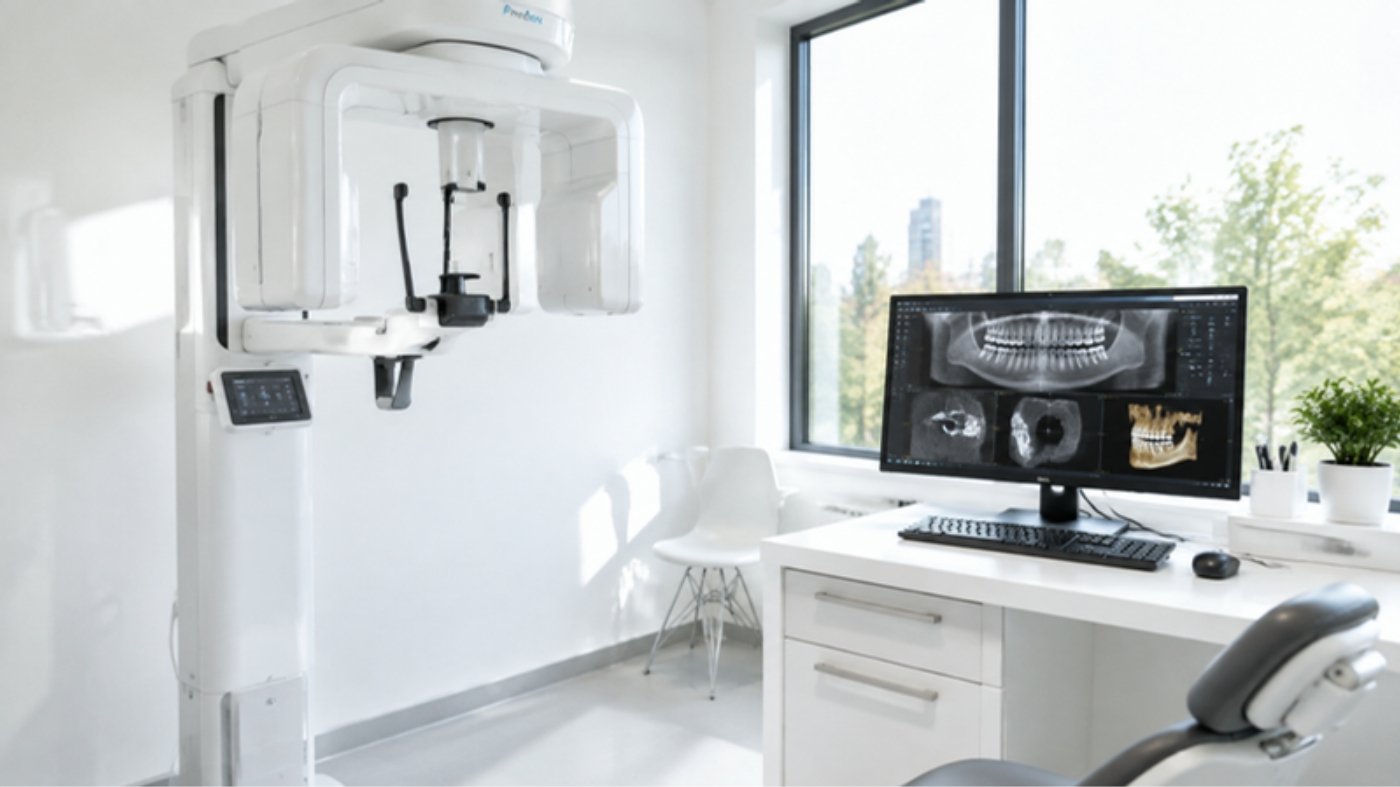
A typical office network moves email and documents. A dental network moves large imaging files between acquisition stations, the server and every operatory, often while the practice management system is updating the chart at the same time.
Practice management vendors are specific about what they need. Henry Schein One's current Dentrix requirements, for example, call for a 1 Gbps wired network, describe wireless as used at the practice's own risk, and recommend turning off network card power management to prevent disconnect errors. Imaging adds even more traffic, especially with CBCT.
Common Network Problems in Dental Offices
- Operatories on Wi-Fi that should be wired, causing slow imaging and dropped connections.
- Consumer-grade switches and routers that cannot keep up with imaging traffic.
- One flat network where patient Wi-Fi, cameras, phones and clinical systems all share the same space.
- Cabling that grew one room at a time, with no labels, no documentation and no spare capacity.
- A single internet connection for a practice that now depends on cloud software, online forms and VoIP phones.
Our Dental Network Design and Integration Services
Network Assessment and Design
We map your current network, test speeds between the server and each operatory, and design a layout that fits how your practice actually works, with room to add chairs, equipment and staff.
Structured Cabling and Equipment
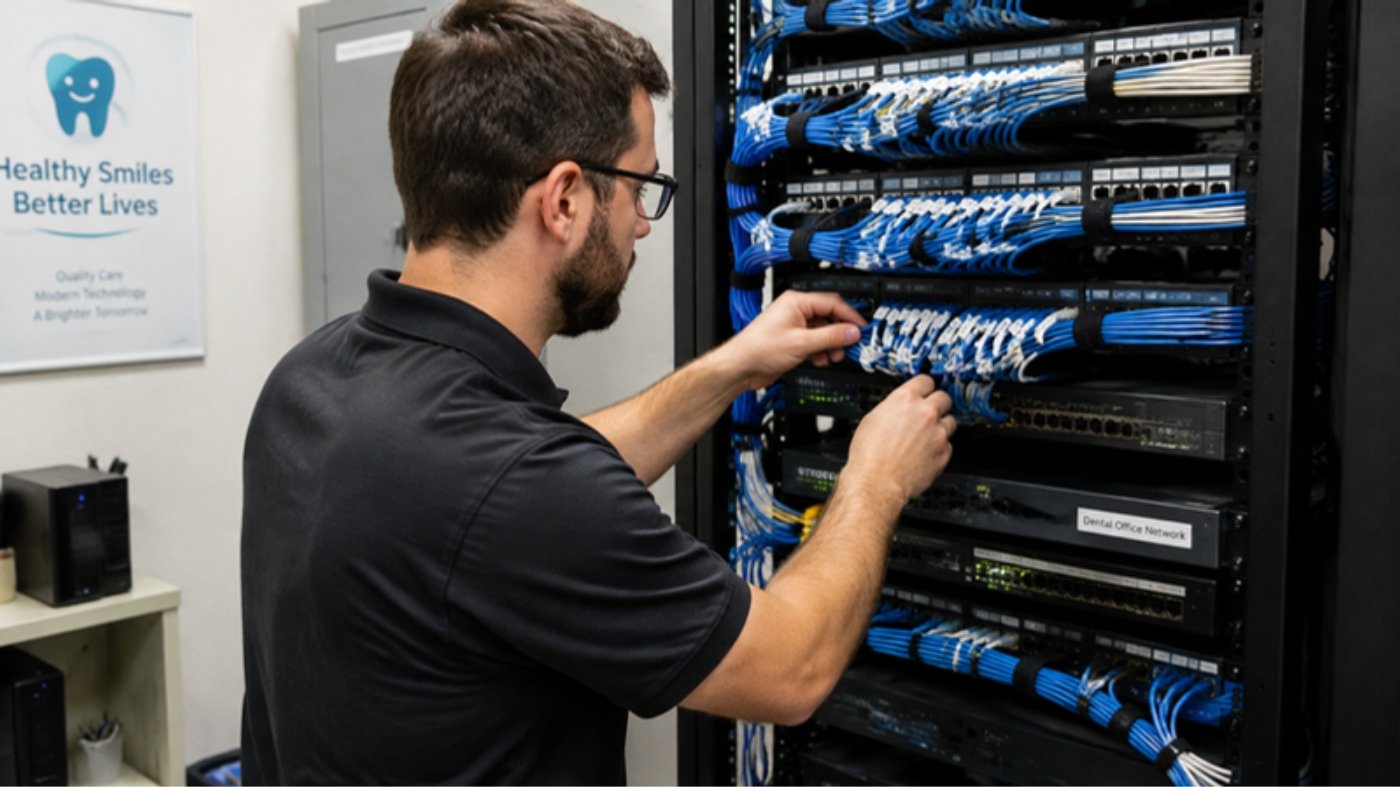
We plan wired drops for every operatory, imaging station and front desk position, along with business-grade switches, firewalls and wireless access points, all labeled and documented.
Imaging and Equipment Integration
We connect sensors, panoramic units, CBCT machines, intraoral cameras and printers to the network and to your imaging and practice management software, and we test that images move where they should.
Network Segmentation and Security
Clinical systems, staff devices, phones, cameras and patient Wi-Fi each belong on their own network segment. Segmentation keeps a problem in one area from spreading to the systems that hold patient data. Our network security services cover the firewall and monitoring side.
Internet Redundancy
Practices running cloud software or VoIP phones need a backup internet connection that takes over automatically, so the schedule and phones keep working when the primary line goes down.
New Office Builds, Remodels and DSO Expansions
The best time to design a dental network is before the walls close. We work with your architect, contractor and equipment vendors on cabling, server and network closet placement, power and cooling. For dental groups, we standardize networks across locations and connect them securely.
Network Design and HIPAA
The HIPAA Security Rule overhaul that regulators have proposed would require technical controls including network segmentation, encryption and multi-factor authentication. Final action has been pushed back to July 2027, but a well-designed network already puts these protections in place. They also feed directly into your dental HIPAA risk assessment.
Planning a Bigger Change?
If you are replacing a server, upgrading workstations or adding imaging equipment, the network should be part of the plan. Our dental technology integration guide walks through how the pieces fit together.
Why Dental Practices Choose Kota
Kota Technology is based in Sioux Falls and supports dental practices across South Dakota and North Dakota, along with neighboring markets including Sioux City and Omaha. Our technicians can be on site for cabling, equipment installs and new office builds, and we handle day-to-day network issues remotely. Learn more about our full dental IT services and our dental software support.
Frequently Asked Questions
Should operatory computers be wired or wireless?
Wired. Practice management vendors such as Henry Schein One call for a 1 Gbps wired network for Dentrix, and imaging files move far more reliably over a wired connection. Wireless is best kept for tablets, staff devices and patient Wi-Fi.
When should we involve IT in a new office build?
As early as possible, ideally during design. Cabling, network closet placement, power and cooling are much easier and cheaper to get right before construction than to fix afterward.
Why should patient Wi-Fi be separate from our clinical network?
Separating patient Wi-Fi, cameras and other devices from the systems that hold patient data keeps a problem in one area from reaching your practice management and imaging systems.
Do we need a backup internet connection?
If your practice uses cloud software, online forms or VoIP phones, yes. An automatic failover connection keeps the schedule and phones working when the primary line goes down.
Build a Network Your Practice Can Rely On
If your imaging is slow, your operatories keep disconnecting or you are planning a new office, we can help you design a network that fits how your practice works.
A conversation costs nothing and gives you a clear picture of where your practice stands.